Heating emergencies
Emergency Furnace Repair for Hampton Homes
A furnace that quits in the cold, a burning smell or a CO alarm is not a job for next week. Call for a free estimate, and we answer or call back the same working day.
Smell gas? Get everyone outside and call the gas utility before you call us.
Quoted before work starts
- Same-Day CallbackWe answer or call back
- Mon to Sat7 am to 6 pm
- Quoted Up FrontNo surprise charges
- Free EstimatesNo obligation
What it involves
Emergency Furnace Repair in Hampton
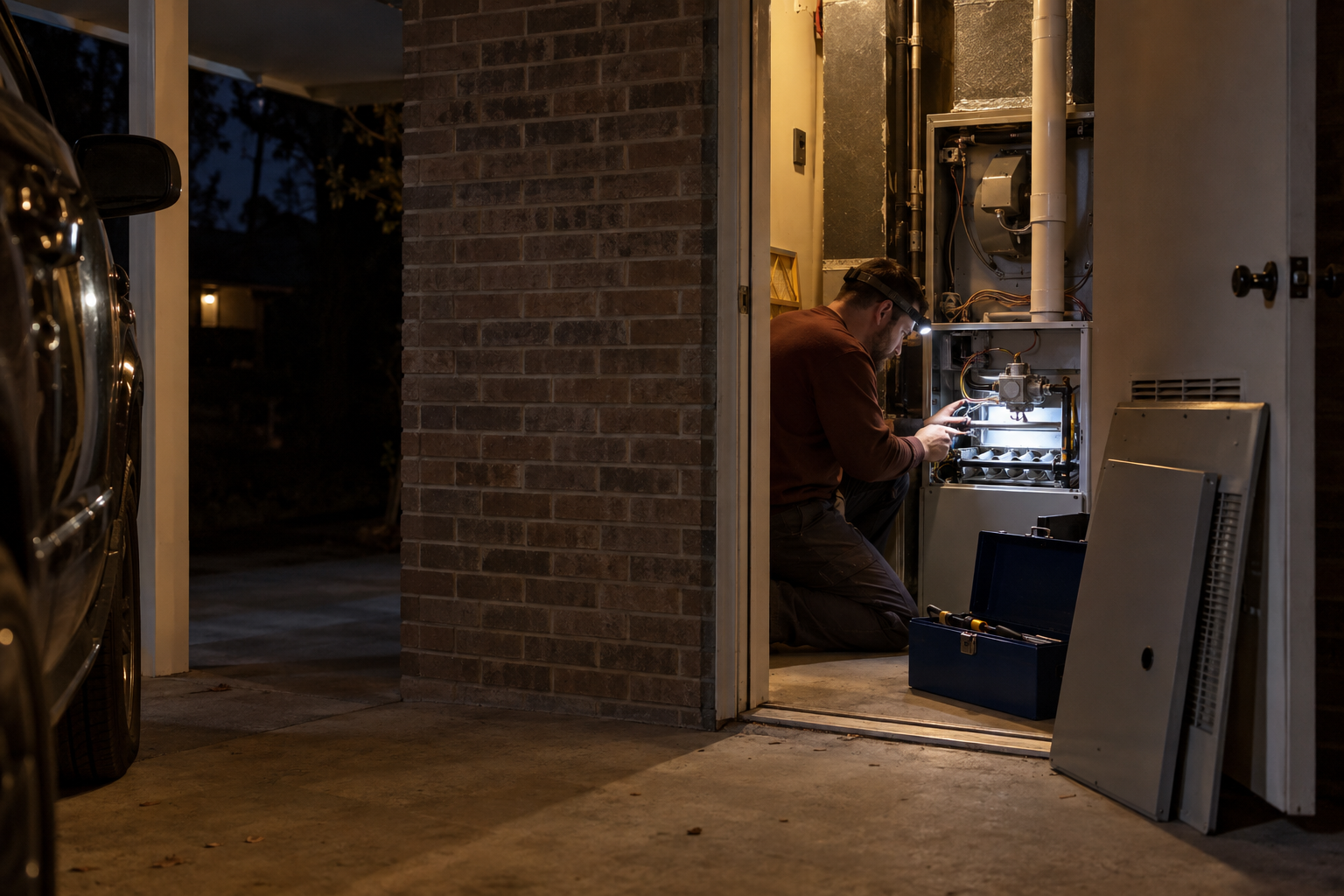
Emergency furnace repair in Hampton answers residential and commercial furnaces that quit or show a safety warning.
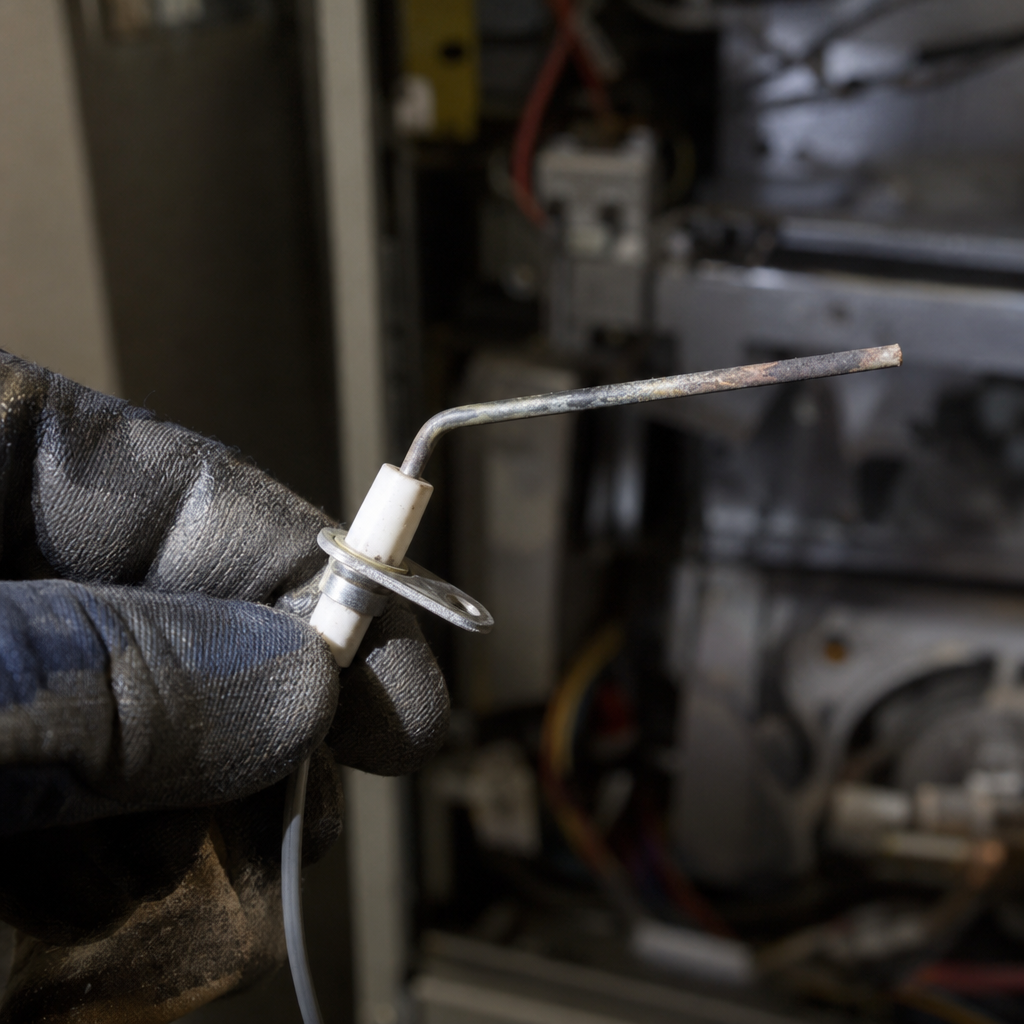
Behind a furnace that quits there is usually a failed part: the "ignitor" that will not light the burners, a dirty "flame sensor" that drops the flame soon after it lights, a "limit switch" tripping on overheat, or a blower motor that has stopped. We find which one with the furnace open, and you hear the price before any repair.
It quits
No heat, cold air from the vents, or burners that will not light or stay lit.
It warns
A yellow flame where it should burn blue, a smell from the cabinet or an alarm going off.
Call now or book it
What Counts as a Heating Emergency
A heating emergency is a failure that puts people or the house at risk, and the list below marks where that line falls, while routine repairs and upgrades wait for a scheduled visit.
A furnace failure in deep winter is more than discomfort: once the house goes cold, pipes can freeze and burst, and the cold itself is a health risk.
Call now
Treat it as an emergency
- No heat in freezing weatherThe house keeps losing heat while you wait, so this goes ahead of routine work.
- A burning or electrical smellTurn the furnace off at its switch or the breaker, then call.
- A CO alarm soundingGet everyone into fresh air before anything else, and call from outside.
- A gas smell near the furnaceLeave the house and call the gas utility; the steps are just below.
Book a visit
Can wait for a working day
- A furnace that still heatsRuns in short bursts ("short cycling") or sounds rough, while the house stays warm.
- Tune-ups and filter changesUpkeep that is booked ahead, not rushed.
- Upgrades and replacementsA new furnace or a system change, planned and quoted in advance.
Safety before repair
Gas Smells and Carbon Monoxide First
A gas smell means leaving the home, touching no switches and calling the gas utility, and the furnace is repaired only after the home is safe.
- Everyone outsidePeople and pets out the door, and the door left open behind you if it is on the way. The smell to act on is rotten eggs.
- Nothing electrical touchedNo lights, no thermostat, no appliances and no call from inside the house: a spark is all it takes.
- The utility secures the lineCall the gas utility from the yard or a neighbor's. They make the line safe and confirm the house is clear.
- The furnace comes afterWith the house confirmed safe, call us, and the furnace gets diagnosed and repaired.
A sounding CO alarm calls for the same exit: everyone into fresh air, and a call to emergency services from outside if anyone has a headache, dizziness or nausea. Keep CO alarms on every level of the home, as the U.S. CPSC Carbon Monoxide Information Center advises.
Behind an alarm there is often a "cracked heat exchanger" or a faulty "gas valve", which is why the furnace stays off until it has been checked.
How the call runs
A Fast Call Back on a No-Heat Call
A no-heat call starts on the phone, with the thermostat, the filter and the breaker checked before a technician with a stocked truck is sent.
Those checks take minutes and sometimes bring the heat back without a visit. When they do not, the call moves on to dispatch.
- The callWhat the furnace is doing, any smell or alarm, and where the house is.
- Checks by phoneA thermostat set wrong, a clogged filter or a "tripped breaker" each stops a furnace with no part failed.
- A technician on the wayA stocked service truck lets most emergency repairs finish without a trip back for parts.
- Diagnosis, then a priceThe failed part is found, and we quote the whole job before any repair starts.
- Repair or a safe stopgapIf the full repair needs a special part, a safe temporary fix keeps the house heated until it arrives.
We answer Monday to Saturday, 7 am to 6 pm. A call outside those hours goes to voicemail, and we return it the next working morning.
(757) 529-6312What it costs
What Moves the Price of an Emergency Repair
An emergency repair has no set price; it depends on what failed, whether that part is on the truck or has to be ordered, and how long the repair takes.
A small part like a flame sensor or an ignitor sits at the low end, a blower motor or a control board costs more, and a cracked heat exchanger usually turns the talk toward a new furnace.
The same on every call
- A free, no-obligation estimate
- The whole job quoted before work starts
- No surprise charges after the quote
Heating or cooling
Emergency HVAC Calls
An emergency HVAC call covers a heating or cooling failure that puts the home or the people in it at risk.
In winter that is mostly the furnace. In a summer heat wave it is the air conditioner, judged by the same test: risk to people or the house makes it urgent, and comfort alone books a scheduled visit.
Furnace down? Get it looked at and quoted.
Monday to Saturday, 7 am to 6 pm, a person picks up or calls you back the same day. After hours, leave a message and we return it the next working morning.
- We show up when we say we will
- We clean up when the work is done