HVAC Repair for Heating and Cooling Systems in Hampton
When the furnace, heat pump or air conditioner stops keeping up, we find the failed part with a meter and quote the whole repair before any work starts.
The estimate is free and commits you to nothing, and we answer or call back the same working day.
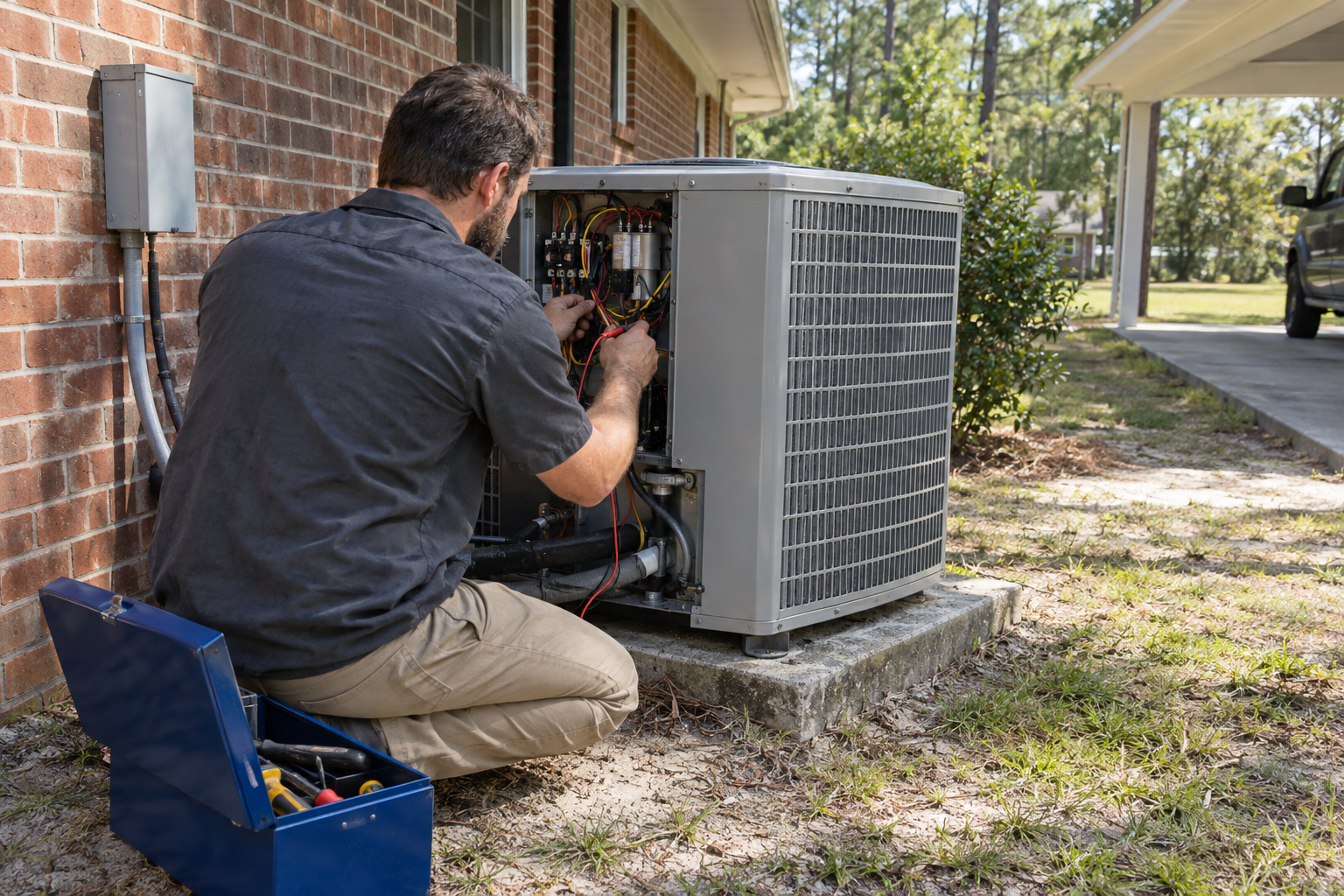
Readings before parts
- Whole Job QuotedNo surprise charges
- On TimeWhen we say we will
- Monday to Saturday7 am to 6 pm
- Clean FinishWe clean up after
What we repair
HVAC Repair in Hampton
HVAC repair in Hampton covers residential and commercial heating and cooling systems, and each system is diagnosed before any part is replaced.
A furnace that will not light and an air conditioner that runs warm look like different jobs, but they share a blower, a thermostat, the wiring and the ductwork, so we read the whole system before naming the fault. You hear what failed, what the fix is and what it costs, then you decide.
-
Heating
Gas and electric furnaces, heat pumps in heat mode, boilers and the auxiliary heat strips that back them up.
-
Cooling
Central air conditioners, heat pumps and ductless mini splits that run warm, ice over or will not start.
-
Airflow
Blower motors, filters and the duct runs that carry conditioned air from the equipment to each room.
-
Controls
Thermostats, control boards, relays and the safety switches that shut a system down when something is wrong.
When to call
Signs Your HVAC System Needs Repair
Uneven temperatures, weak airflow, a breaker that trips and a burning smell are the signs a heating or cooling system needs repair.
These rarely clear up on their own, and a system run hard on a failing part tends to wear out the healthy parts around it. Seeing any of them? Call (757) 529-6312 and tell us what it is doing.
-
Rooms that never reach the set temperature
Some rooms stay warm or cold while the thermostat reads fine, which points to airflow, a leaking duct or a part not doing its share.
-
Weak airflow
Air barely moves at the registers, often from a clogged filter, a slipping blower belt or a duct that has come apart.
-
A breaker that keeps tripping
A "tripped breaker" that will not stay reset points to a wiring, heating element or motor fault, not to the breaker itself.
-
A burning smell at startup
A brief dusty smell when the heat comes on for the season is normal; hot wiring or melting plastic is not, so switch the system off and call.
How we find it
How an HVAC Diagnosis Runs
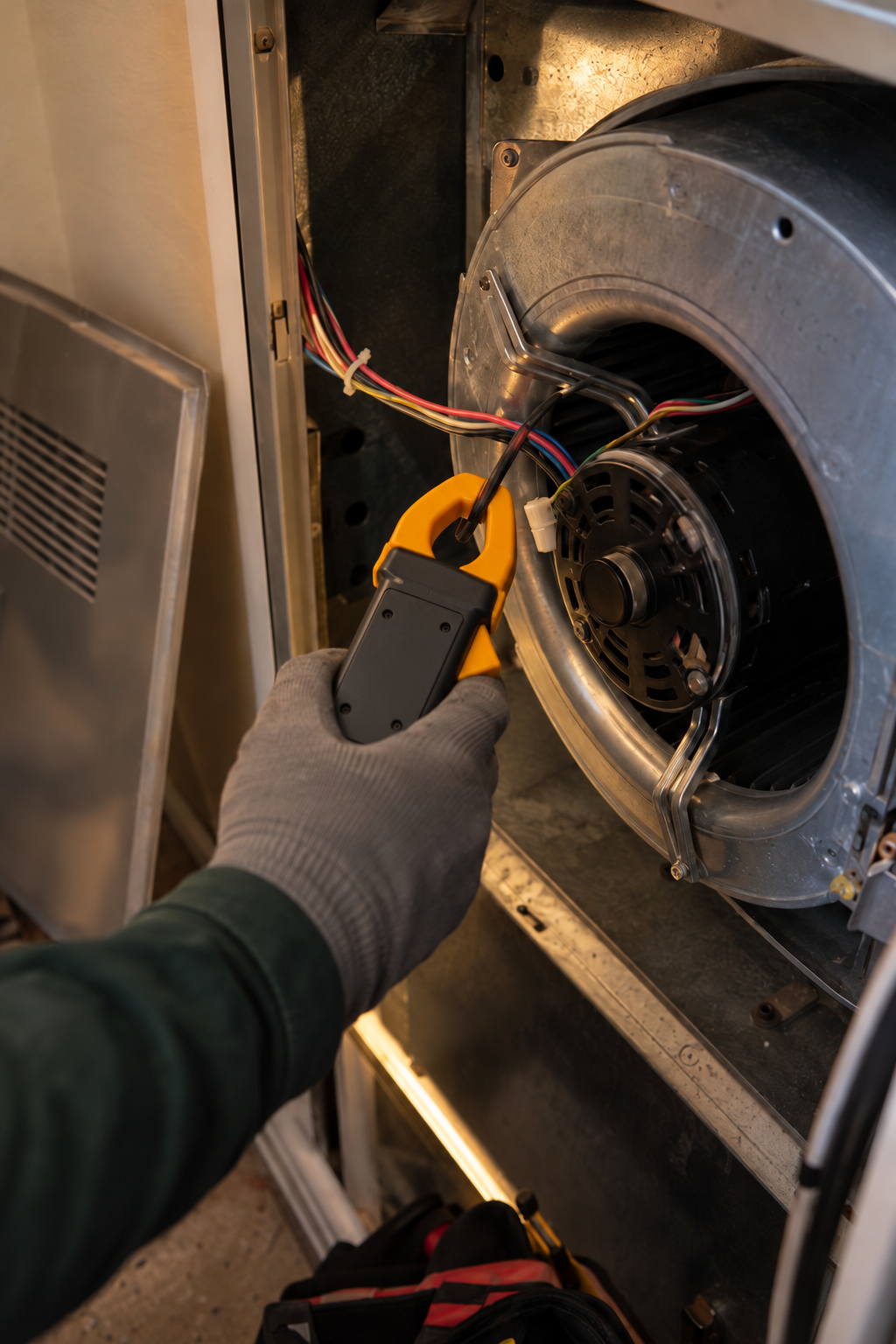
A diagnosis measures voltage and amperage on the motors, tests the capacitors, checks gas pressure and temperature rise, and reads combustion with a digital analyzer.
- Power and motorsVoltage is checked at the connections, and the blower and inducer motors are measured for "motor amp draw", the reading that shows a motor straining before it quits.
- Capacitors and switchesThe "run capacitor" is tested against its microfarad rating, so a good motor is not replaced when the cheap part that starts it is the real fault. Contactors, relays and safety switches get the same meter check.
- Gas, ignition and heatOn a gas furnace, the gas pressure, the igniter's resistance and the temperature rise across the "heat exchanger" are read against the maker's spec.
- Combustion and draftA digital "combustion analyzer" reads the flue gases and the venting draft, rather than a look at the flame.
With the readings in hand, we quote the whole job before we start, and the price does not move after.
Gas and carbon monoxide
Safety Checks on Every Heating Call
Testing for gas leaks and carbon monoxide is a standard step on a heating repair in the trade, not an upsell added to the bill.
Carbon monoxide has no smell, and a cracked heat exchanger or a blocked flue can send it into the house, so the test belongs on the visit whatever part failed. The U.S. CPSC Carbon Monoxide Information Center advises CO alarms on every level of the home.
An all-electric furnace burns nothing and makes no carbon monoxide, so its safety checks fall on the wiring, the heating elements and the limit switch instead.
What it costs
What Sets the Price of a Repair
Repair prices follow the fault, so the number comes from the readings, and you see it before any work starts.
The estimate is free
It costs nothing and commits you to nothing. Call, describe what the system is doing, and we set a time for a service visit to test it.
Call for a Free EstimateThe part that failed
A capacitor, igniter or flame sensor sits at the low end; a blower motor, control board or compressor at the high end.
Where the equipment sits
An air handler in a hall closet is quicker work than a furnace in a hot attic or a duct deep in a low crawlspace.
Gas, electric or heat pump
Each kind of system has its own parts, and gas equipment adds the combustion and leak tests to the visit.
Repair or replace
A cracked heat exchanger, or an aging unit that keeps failing, turns the talk to replacement, and we say so before you spend on a repair.
Ductwork
Duct Repair
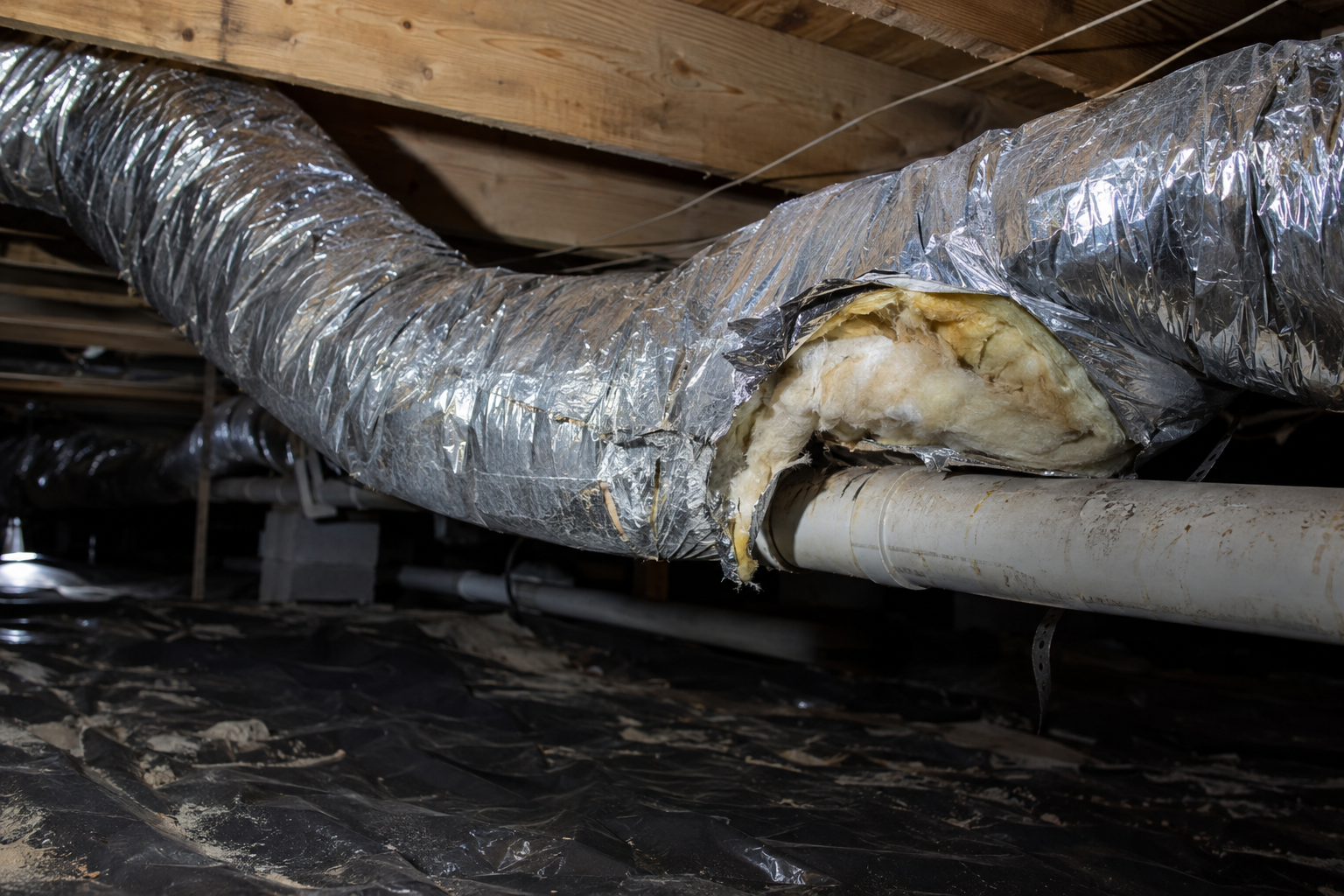
Duct repair seals and rebuilds leaking or crushed ducts that waste heated and cooled air and pull dust into the home.
In a house built over a crawlspace, the duct runs lie under the floor, where a torn jacket, a joint pulled apart or a run crushed flat can go unseen for years. A leak on the return side draws crawlspace air into the system, and a crushed supply run starves the room at its end.
The fix is sealing joints with mastic, replacing torn or flattened sections and hanging runs so they do not sag. A "static pressure" reading across the system shows whether the ducts are choking the airflow.
Related work
Related Heating and Cooling Work
Related services each have their own page, and furnace repair is our core service.
Heat or air acting up? Get the whole fix quoted.
We answer Monday to Saturday, 7 am to 6 pm, and a message left after hours gets a call back the next working morning.
- Free, no-obligation estimates
- Same-day answer or callback