-
Free EstimatesNo obligation
-
Quoted Up FrontNo surprise charges after
-
Clean FinishWork area left clean
-
Mon to Sat7 am to 6 pm
What it involves
Heater Repair in Hampton
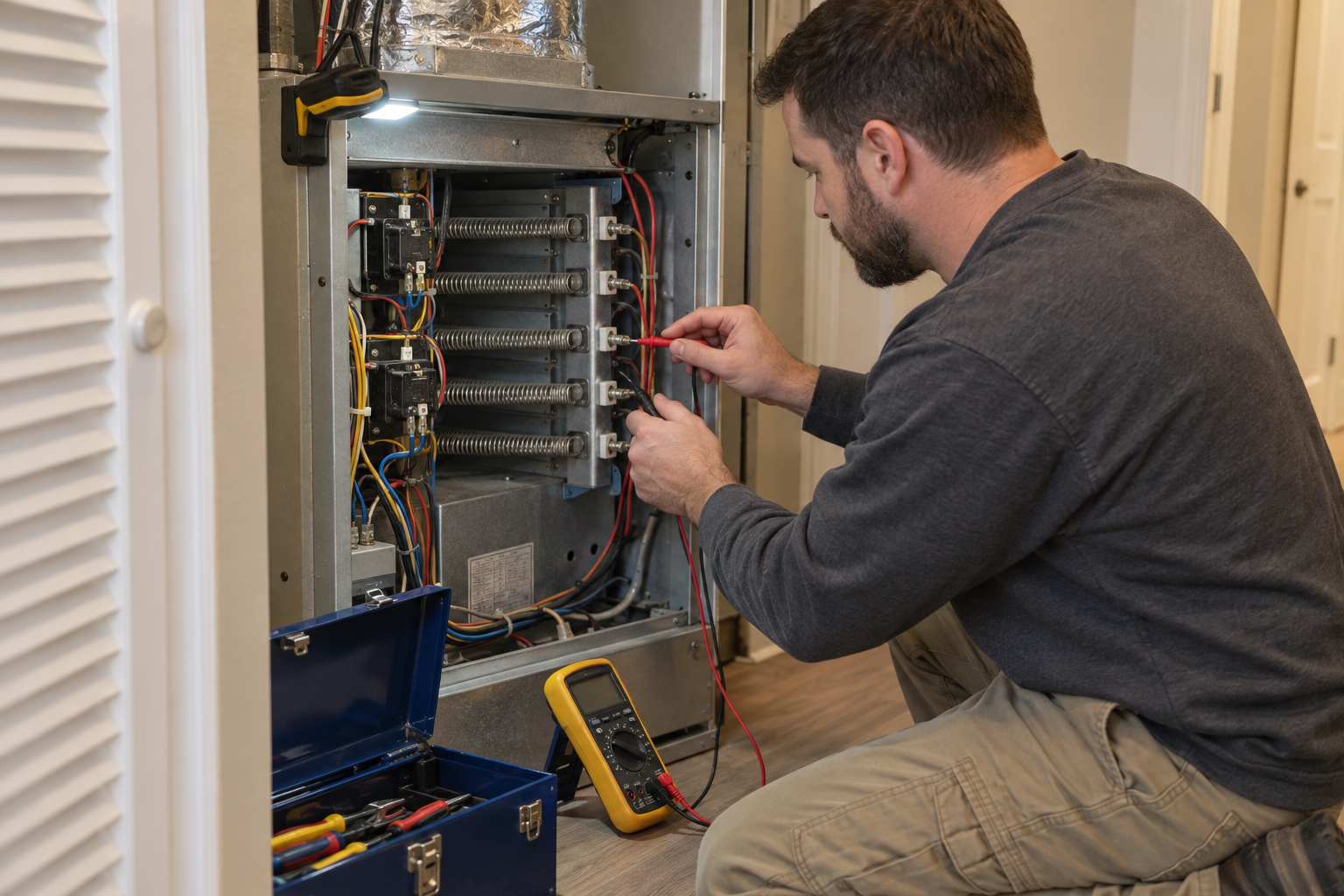
Heater repair brings residential and commercial heaters that have stopped heating back to steady, even heat, whatever fuel they run on. Around Hampton that means gas, electric and oil furnaces, plus the heat strips and backup heat inside a heat pump system.
The job starts with finding the part that actually failed, because cold air from the vents, a furnace that keeps turning on and off, or a breaker that keeps tripping can each trace back to several different parts. The fix comes after that, and the price comes before it.
- Free
- Estimate, no obligation
- Same day
- We answer or call back
Heaters covered
Electric, Gas and Heat Strip Heaters
Heater repair covers gas, electric and oil furnaces of any make and model, along with the heat strips and heat pump backup heat that carry a house through its coldest days.
Whether yours sits in a hall closet, the garage or the attic, tell us on the call what you have and what it is doing.
-
Gas furnaces
Burners, ignition and the safety controls that sit around a flame.
-
Electric furnaces
Heating elements, sequencers and the limit switch, with no combustion at all.
-
Oil furnaces
An oil burner fails in its own ways, so the diagnosis starts from the fuel.
-
Heat strips
The electric strips in an air handler that add heat when the system calls for more.
-
Heat pump backup heat
The auxiliary heat a heat pump leans on when it cannot keep up alone.
When it fails
Electric Furnace Problems
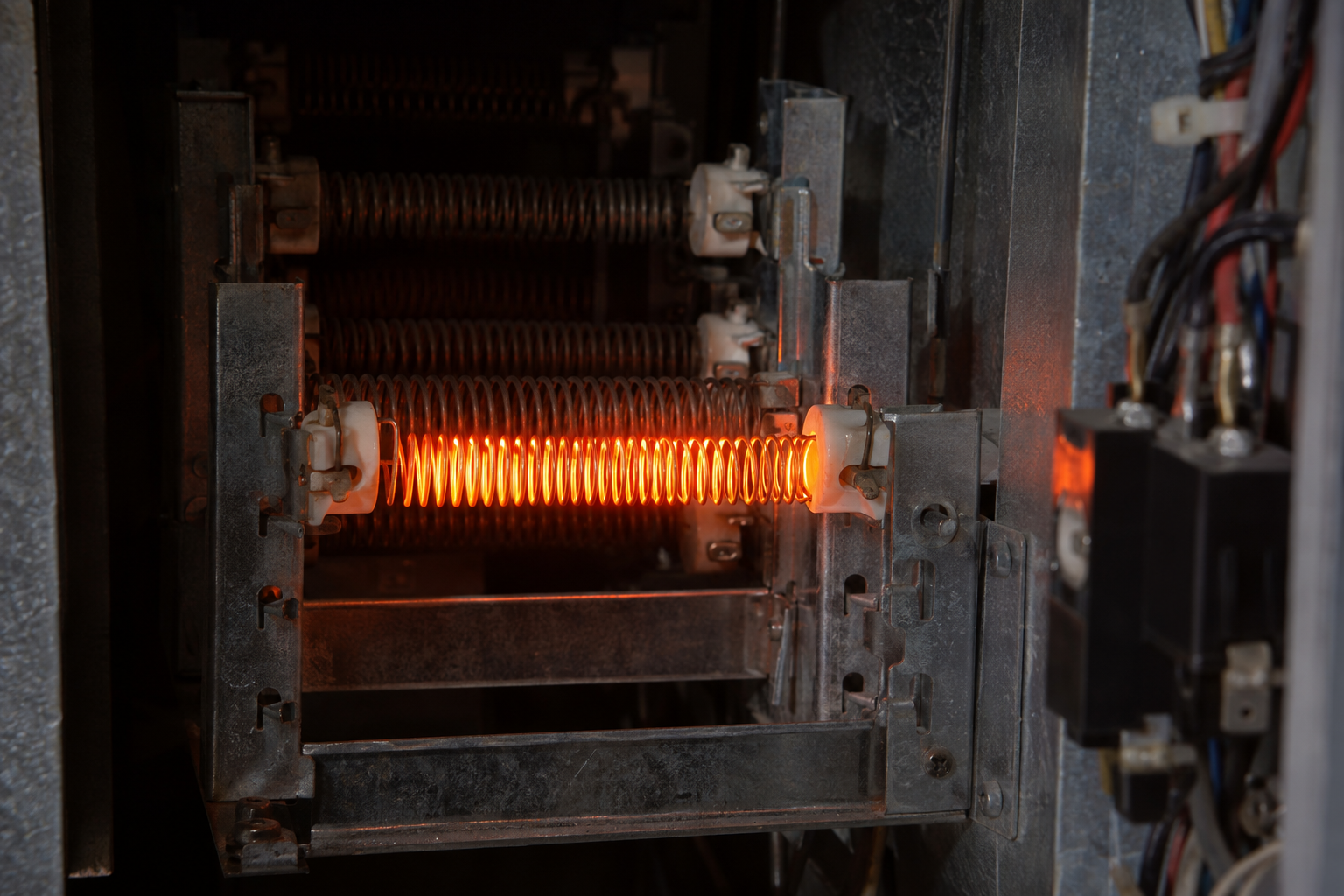
The usual failures on an electric furnace sit in three places: its heating elements, the sequencers that switch them on, or the limit switch that guards against overheating.
- "Heating element"The coils that get hot. A burned-out element leaves the furnace running with less heat, or none.
- "Sequencer"Brings the elements on in stages. When it sticks, elements stay off and the house never warms up.
- "Limit switch"The overheat safety switch. A failing switch may not shut the furnace off when it overheats, and that is a safety hazard.
A breaker that keeps flipping is the other warning sign. A frequent "tripped breaker" on an electric heater points to an electrical fault in the wiring, an element or a motor, and resetting it again and again only hides the fault.
Before you open the panel
High Voltage and Heater Safety
Changing the filter and checking the thermostat are yours to do, and anything past them belongs to a trained technician, because an electric heater carries high voltage that can cause a severe injury.
Safe for you
- Replace a dirty filter
- Check the thermostat setting and batteries
Leave to a technician
- Anything behind the furnace panel
- Elements, sequencers, switches and wiring
An electric furnace burns no gas or oil, so it cannot leak gas or make carbon monoxide the way a gas unit can. The danger inside it is electrical.
How it runs
From your call to warm again
- You callWe answer or call back the same working day, Monday to Saturday. After hours, leave a message and we return it the next working morning.
- We show up and find the faultWe arrive when we said we would and trace the problem to the part that failed.
- You approve the whole priceWe quote the whole job before we start. The estimate is free, and nothing is added after.
- We repair and clean upThe heat runs again before we leave, and the work area is left clean.
Gas or electric
Gas and Electric Heat Compared
Gas furnaces are cheaper to run but need a gas line, while electric furnaces work anywhere there is power and last longer.
| What matters | Gas furnace | Electric furnace |
|---|---|---|
| Running cost | Cheaper to run, and the most common choice | Electricity is the pricier heat source |
| What it needs | A gas line to the house | Power, and nothing more |
| Typical life | About 10 to 15 years | Roughly 20 to 30 years with proper maintenance |
| Cost to install | More than a similarly sized electric unit | Less than a similarly sized gas unit |
| Combustion | Burns fuel, so carbon monoxide is a risk to manage | No combustion and no carbon monoxide |
| Fits best | Homes with a gas line already in | Smaller homes, condos and additions without natural gas, with quieter running and little upkeep |
With gas heat, keep CO alarms on every level of the home, as the U.S. CPSC Carbon Monoxide Information Center advises.
What it costs
What Sets the Price of a Repair
The price of a heater repair comes down to the part that failed and the time it takes to reach and replace it, so the exact number comes from the call and the diagnosis.
A sensor or a run capacitor sits at the small end, and a blower motor or a control board at the large end; on an older furnace, a control-board failure can tip the choice toward replacement. A blower that will not start is often a bad capacitor rather than a dead motor, which is why the part gets tested before anything is replaced.
Call for a quote. You see the full price before we start, with no surprise charges after.
Related work
Related Heating and Cooling Work
These related services each have their own page, and furnace repair is the core of what we do.
Heater quit? Get it quoted today.
We pick up Monday to Saturday, 7 am to 6 pm. Outside those hours, leave a message and we call back the next working morning.
- The whole job quoted before we start
- We clean up when the work is done